

It’s 2am…you’ve been staring at the ceiling, counting sheep for three hours. Your mind just won’t stop racing. Thought after thought, worry after worry float through. Sleep, you know you need it, but it feels like an impossible task.
If you’re nodding along, you’re not alone. Over half of Australian adults regularly experience at least one sleep-related symptom. [1] Poor sleep is not just a nuisance. It can impact our daily functioning and productivity. A recent report found that more than half of working Australians have turned up to work exhausted, and 87% said it impacted their productivity. [2]
It’s not just about feeling tired the next day. Your sleep habits affect your mood, memory, concentration, and long-term mental health. Research from Stanford Medicine found people with insomnia are 10 times more likely to have depression and 17 times more likely to have anxiety. [3] The relationship between sleep and mental health goes both ways. Lack of sleep can contribute to mental health issues, and conditions like anxiety and depression can also make it harder to sleep.
How restless sleep affects your mental health
We’ve all had nights where it can be tough to get a good night’s sleep. Stress from increased responsibilities, a period of change, or just life’s ups and downs can leave even the best sleepers feeling run down. While restful sleep tends to return once periods of hardship are over, consistently restless sleep can be a symptom of a mental health diagnosis (e.g., depression and anxiety) or a side-effect of some medications.
If you are having difficulty gaining good quality sleep, a good starting point is to see your doctor and discuss the issue with them. This will help identify any physical causes of poor sleep and explore a strategy for addressing sleep.

7 ways to improve your sleep and mental health
Improving your sleep quality can come down to your daily behaviours and making small, consistent changes.
1. Stick to a regular bedtime and wake time
Your body has an internal clock (circadian rhythm) that thrives on routine. Going to bed and waking up at the same time every day, even on the weekends, helps to regulate this clock. “Catch-up” sleep can disrupt this rhythm, making it harder to fall asleep the next night.
2. Limit caffeine intake in the hours leading up to bed
Caffeine can be found in coffee, tea, colas, and chocolates, and is a stimulant that can impact your ability to fall asleep. Caffeine has a half-life of 4-6 hours, meaning its effects linger long after you’ve finished that afternoon coffee. Avoiding caffeine in the hours leading up to bedtime can give your body a chance to wind down naturally.
3. Exercise regularly
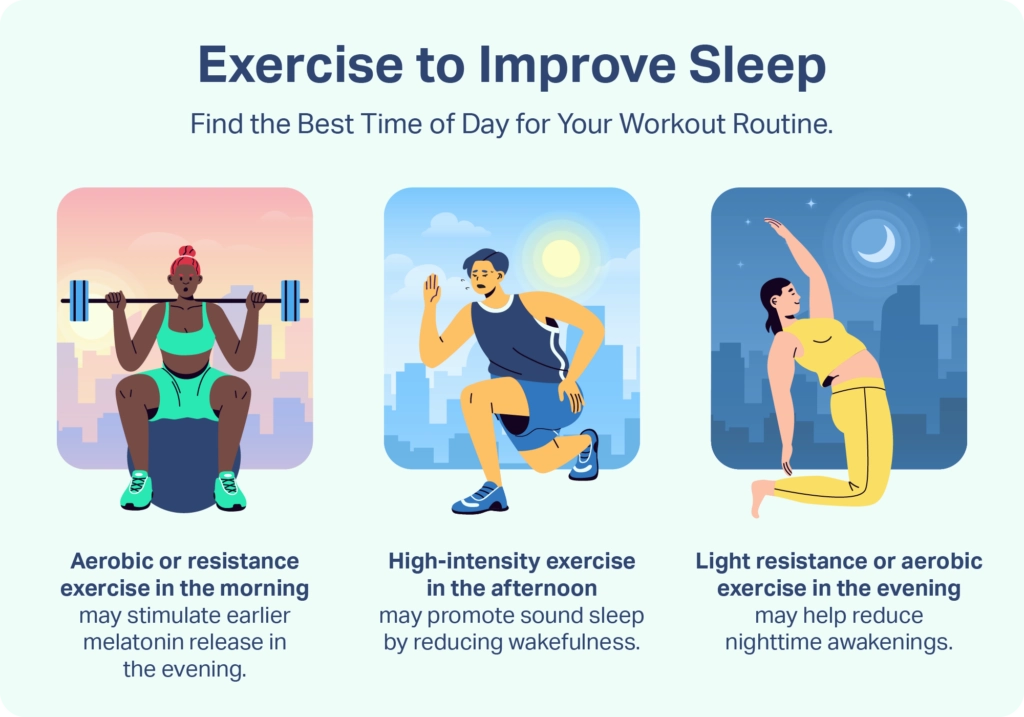
Regular exercise or physical activity is great for your physical and mental health. It can also significantly improve your sleep quality. [6] However, a workout too close to bedtime can be stimulating. The National Sleep Foundation recommends finishing any moderate exercise at least 1-2 hours before you plan to sleep. [4] Vigorous workouts should finish 2-4 hours before sleep. [5]
4. Avoid alcohol
While alcohol might make you feel drowsy initially, it reduces your sleep quality, impacting the restorative REM sleep stage. [7] This can lead to frequent waking, night sweats, and headaches.
5. Be strategic with your naps
The longer we are awake, the more ‘sleep pressure’ we build up. Napping can reduce sleep pressure and make it difficult to fall asleep at your regular bedtime.
If naps are required (e.g., for safety or to manage fatigue), try to limit the nap to 30 minutes and keep to before 3 pm.
6. Create a sleep ritual
Engaging in a consistent, relaxing ritual before bed each night can help signal to your body that it’s time to prepare for sleep. This could include:
- Meditating or practising deep breathing.
- Switch off digital devices for at least 30 minutes before bed
- Read a physical book
- Do some gentle stretching or yoga

7. Develop strategies for managing worrying thoughts
Bedtime is often when our minds run wild with worries. Instead of trying to solve the problems in bed, set aside time during the day to address them. Try writing a to-do list for the next day to clear your mind and put your thoughts on paper so you can truly switch off.
Feeling stuck? Help is available
The link between sleep and mental health is real. You don’t have to navigate it alone. If you are struggling with a consistent lack of sleep or are finding it difficult to manage stress and worry, help is available.
Consider accessing support from a trusted person like a family member, friend, GP or a mental health professional.
Sources
[1] Sleep Health Foundation. (2024). Chronic Insomnia Disorder in Australia
[2] HIF. (2024). HIF Sleep Index: 2024
[3] Stanford Medicine. (2025). How sleep affects mental health (and vice versa): What the science says
[4] National Sleep Foundation. (2025). Get Moving to Get Better Sleep